The Biggest Threat to Digital Marketing Right Now
Digital marketing has never been more powerful, and it has never been more fragile at the same time. Businesses in San Francisco, Palo Alto, and San Jose have more tools, more channels, and more data available to them than at any previous point in history. And yet the number of businesses struggling to maintain their online visibility, hold their search rankings, and turn digital traffic into real revenue is growing, not shrinking. Something is changing underneath the surface of the industry, and it is changing faster than most marketing strategies are keeping up with.
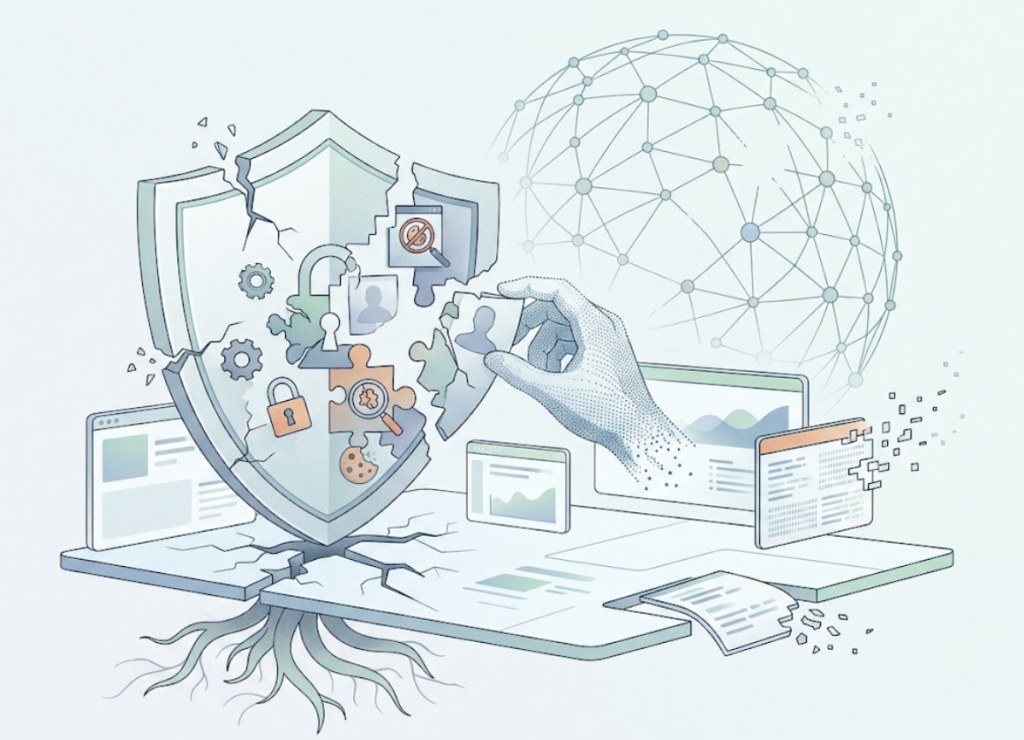
The biggest threat to digital marketing right now is not any single platform update, not any one algorithm change, and not the rise of any particular technology. The biggest threat is fragmentation combined with declining trust, playing out simultaneously across every major channel at the same time. Search behavior is fragmenting across AI tools, social search, and traditional engines. Audience attention is scattered across more platforms than ever. And the trust that once made digital advertising reliable is eroding as people grow more resistant to ads, more skeptical of branded content, and more protective of their data and attention.
Understanding what this threat actually looks like in practice, and what businesses can do to adapt, is one of the most useful things any marketer or business owner can invest time in right now.
How Search Fragmentation Is Undermining Traditional SEO Strategy
For more than two decades, Google was the center of the search universe. If you ranked well on Google, you got traffic. If your search engine optimization was strong, your business grew. That relationship between ranking and traffic was reasonably predictable, which made it possible to build a reliable digital marketing strategy around it.
That predictability is breaking down. A growing percentage of searches are now starting somewhere other than Google. Younger audiences are searching on TikTok, Instagram, and YouTube. Professionals are searching on LinkedIn. Shoppers are going directly to Amazon. And an increasing number of users are asking AI tools like ChatGPT, Perplexity, and Google’s own AI Overviews for direct answers instead of clicking through to websites at all. The click never happens. The traffic never arrives. The rankings are there, but the visits are not.

This matters for any business that has built its online marketing strategy around driving organic search traffic to its website. The website is still important, but the path people take to arrive there has become much less predictable than it used to be. A page that ranks in position one for a commercial query is now competing with an AI-generated answer that appears above it, a map pack of local businesses, a set of shopping ads, featured snippets, and often a People Also Ask section before the user reaches the first traditional organic result. Studies tracking click-through rates on top-ranking pages have shown consistent declines as these zero-click features take up more of the visible search results page.
For businesses investing in professional SEO services, the response to this shift is not to abandon search optimization. It is to broaden what search optimization means. Optimizing for AI-generated answers requires a different kind of content than optimizing for traditional blue links. Content that earns citations in AI answers tends to be direct, structured, authoritative, and specific. It answers questions clearly at the beginning of the content and then supports those answers with depth and accuracy. It is written by people with demonstrable expertise and published on sites with established credibility. The fundamentals of quality are the same, but the format and intent behind content creation need to shift.
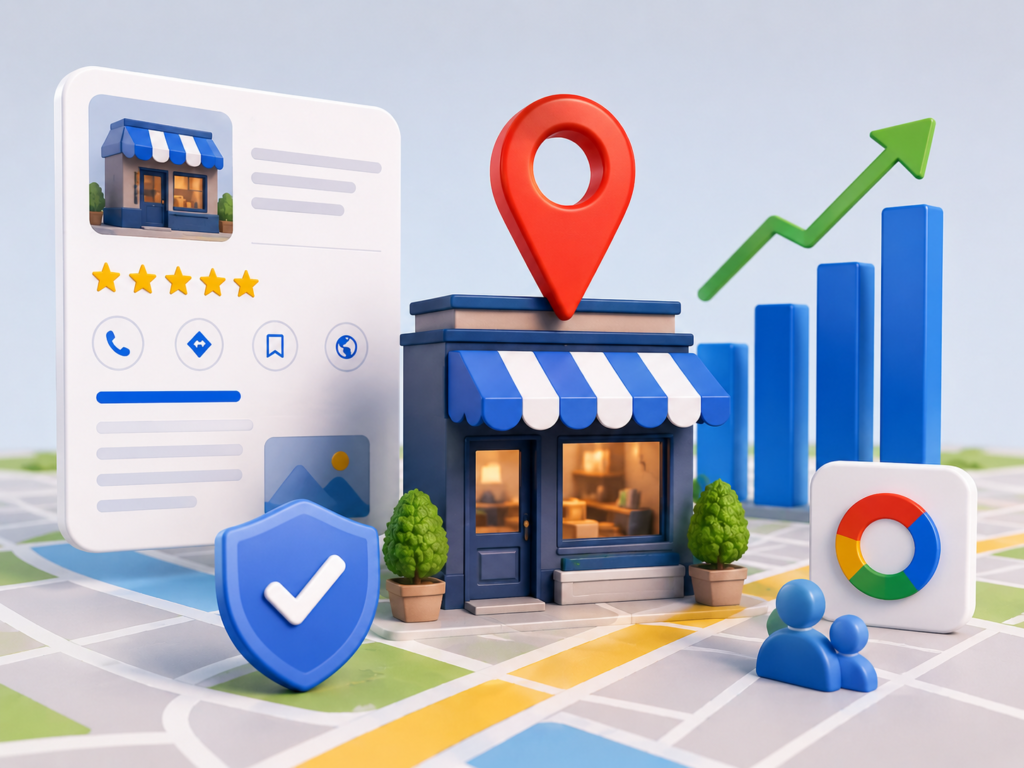
Location-based search is one area where traditional SEO still holds strong, which is why businesses in San Jose, San Francisco, and Palo Alto that maintain active and well-optimized Google Business Profiles continue to capture local search traffic that AI overviews do not fully displace. When someone searches for a specific service near them, local intent queries still produce map results, business listings, and clickable links that drive real visits. For local businesses, this makes Google Business Profile management one of the most stable and valuable search marketing investments available right now.
The Trust Crisis and What It Means for Content and Advertising
The second dimension of the threat is harder to see in analytics dashboards but is showing up clearly in how people respond to branded content and digital advertising. Audiences are becoming more skeptical. Years of intrusive ads, misleading headlines, overpromised products, and algorithmically amplified misinformation have created a default posture of doubt that many consumers now bring to everything they encounter from a brand online.
This trust deficit is affecting digital advertising at every level. Ad blocking software is used by a significant and growing portion of internet users, particularly among younger demographics and tech-savvy markets like the Bay Area. Even users who do not block ads have developed what researchers call banner blindness, a trained tendency to ignore or skip past any element on a page that looks like an advertisement. Click-through rates on display ads have dropped steadily over the past decade, and the cost of acquiring a customer through paid channels has risen in many industries as competition increases and attention becomes harder to capture.
For businesses running Google Ads management and paid social campaigns, this means the creative quality and targeting precision of campaigns matter more than they used to. An ad that feels relevant, honest, and genuinely useful still gets clicked. An ad that feels interruptive, generic, or manipulative gets ignored or actively avoided. The businesses that are maintaining strong conversion rate optimization results from their paid campaigns are the ones treating their ad creative as a reflection of their brand values rather than just a mechanism for generating clicks.
Content marketing is experiencing its own version of the trust crisis. The explosion of AI-generated content has flooded the internet with mediocre articles that look informative but offer nothing original. Search engines and users alike are getting better at identifying this kind of content, and the result is that the bar for what counts as genuinely useful content has risen sharply.
A blog post that summarizes publicly available information in a slightly reorganized format is no longer enough to earn rankings or audience loyalty. Content that earns trust in the current environment is content that demonstrates real expertise, shares original perspective, cites credible sources, and gives readers something they could not find by spending thirty seconds on any other page about the same topic.
For a business trying to build genuine online visibility through content, the practical implication is that publishing less but making each piece meaningfully better is a more effective strategy than publishing frequently at a surface level. One deeply researched, expertly written article that answers a real question with specificity and accuracy will consistently outperform ten generic posts that cover the same ground without adding any real insight. This is a shift in mindset as much as a shift in strategy, and it runs counter to the volume-focused content approaches that many businesses built their early digital marketing success on.
Email marketing has proven more resilient to the trust crisis than most channels, which is one reason why smart marketers treat their email list as one of their most valuable assets. An email list is a channel you own and control. It does not depend on any algorithm, any platform, or any policy change from a technology company.
When someone subscribes to your emails, they are giving you direct access to their attention on terms they agreed to. That is a fundamentally different relationship than a social media follower who might never see your content depending on how the algorithm feels that day. Building and maintaining a quality email list, with genuine segmentation and content that reflects what each segment actually cares about, is one of the most reliable digital marketing strategies available in an environment where third-party platforms are becoming less dependable.
The Data and Privacy Shift That Is Changing Targeting Forever
Underneath both the fragmentation problem and the trust problem sits a structural change in how digital advertising works: the slow but steady erosion of third-party tracking data. For years, digital marketing ran on a detailed infrastructure of cookies and cross-site tracking that allowed advertisers to follow users across the web, build detailed behavioral profiles, and target ads with remarkable precision. That infrastructure is being dismantled.
Apple’s App Tracking Transparency framework, introduced a few years ago, dramatically reduced advertisers’ ability to track iOS users across apps and websites. The impact on Facebook and Instagram advertising was immediate and measurable, with many businesses reporting sharp drops in attribution accuracy and increases in customer acquisition costs. Google has been moving toward phasing out third-party cookies in Chrome for years, and while the timeline has shifted multiple times, the direction is clear. The era of surveillance-based targeting is winding down, and the businesses that are still entirely dependent on it are the most exposed to what comes next.

The shift toward a first-party data model changes how businesses need to think about their relationship with their audience. First-party data is information that customers share with you directly, through form fills, email subscriptions, purchase history, account creation, and other direct interactions with your brand. This data is more accurate, more privacy-compliant, and more durable than any third-party data because it comes directly from the people you are trying to reach rather than from inferred behavioral tracking across other websites.
Building a first-party data strategy means designing more touchpoints where people voluntarily share information with your business. It means having a well-structured website with clear reasons for people to sign up, register, or engage. It means creating content so valuable that people want to subscribe to receive more of it. It means investing in marketing automation tools that can segment and activate that first-party data across email, retargeting, and personalization without depending on third-party cookies. For businesses in San Francisco and across the Bay Area, this is not a future concern. It is a current operational priority.
ViewRanking Digital Marketing Agency works with businesses across San Francisco, Palo Alto, and San Jose to navigate exactly these shifts, building digital marketing strategies that account for search fragmentation, content trust, and the move toward first-party data, so that the businesses they work with are building on solid ground rather than on channels and tactics that are losing reliability.
The threat to digital marketing right now is real, but it is not fatal for businesses that understand what is changing and adapt accordingly. The marketers and businesses that will grow through this period are the ones treating the disruption as a signal to build something more sustainable. That means creating genuinely useful content instead of optimized content. Building real audience relationships instead of renting attention from platforms. Investing in owned channels like email alongside paid ones. And building a brand that people actively seek out rather than one they scroll past.
Search is changing. Advertising is changing. Tracking is changing. Audience attention is changing. The businesses that recognize all of these shifts as parts of one larger pattern, and respond with a connected strategy rather than a series of reactive adjustments, are the ones that come out of this period with stronger market positions than they went in with. That is not an easy path, but it is the right one for any business serious about long-term marketing success in the current environment.