Graphic Design and UI/UX: Understanding the Key Differences
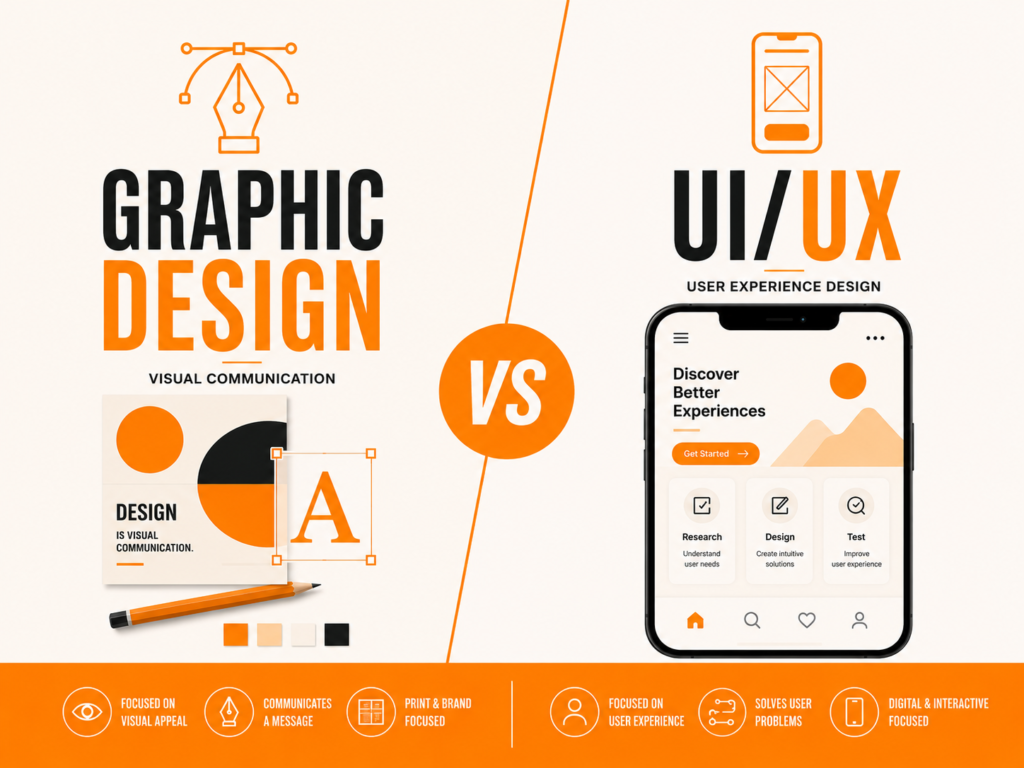
Walk into any creative team meeting and you will likely hear graphic design and UI/UX used as if they mean the same thing. They do not. The two disciplines are related, they often overlap, and professionals in both fields share some of the same tools, but the goals behind the work are very different. Confusing them leads to hiring the wrong people, briefing projects incorrectly, and building brands or products that look good on the surface but fail to actually work for the people using them.
If you run a business in San Francisco, Palo Alto, or San Jose and you are trying to figure out what kind of design support you actually need, understanding this difference is a good place to start. Whether you are building a new brand, redesigning a website, launching an app, or trying to improve your online marketing results, the type of design you invest in should match the outcome you are trying to achieve. This guide explains both fields clearly, covers where they overlap, and helps you figure out which one your business needs and when.
What Graphic Design Is and What It Is Really For
Graphic design is the practice of creating visual communication. It uses typography, color, imagery, layout, and composition to send a message. A logo is graphic design. A business card is graphic design. A social media graphic, a billboard, a product label, an email newsletter template, a PDF brochure, and a brand style guide are all graphic design. The job of the graphic designer is to take a message or idea and make it look clear, compelling, and consistent with the brand it represents.

At its core, graphic design is about communication and perception. When someone sees your brand for the first time, what they feel in that moment is shaped almost entirely by graphic design. The colors you choose carry emotional associations. The fonts you use signal whether your brand feels playful or professional, modern or traditional. The way your visual identity is put together tells people something about who you are before they read a single word. This is why brand strategy and visual design are so closely connected. A strong brand development strategy is not complete without a visual system that supports it.
For businesses focused on digital marketing services, graphic design shows up in almost every channel. The ads you run on Google or social media depend on visual design to stop someone from scrolling. The content you share on Instagram is competing with thousands of other posts, and design is what makes yours stand out. Even the emails you send as part of an email marketing automation campaign perform better when they are visually clear and on-brand. Design is not decoration. It is a performance tool that directly affects how well your marketing works.
Good graphic design does not happen by accident. It comes from a designer who understands your target audience, your brand values, and your marketing goals, and who can translate all of that into visuals that connect. For businesses across the Bay Area trying to build online visibility and stand out from competitors, investing in professional graphic design is one of the most direct ways to improve how your brand is perceived.
What UI/UX Design Is and Why It Solves a Different Problem
UI stands for user interface. UX stands for user experience. While these two terms are often bundled together, they actually refer to two related but distinct parts of the design process. UX design is about how something works and how it feels to use. UI design is about how the interface looks and how users interact with it visually. Together, they shape the experience a person has when they use a website, an app, or any digital product.

A UX designer starts with research. They want to understand who the user is, what the user is trying to accomplish, and what obstacles are getting in the way. They map out user journeys, create wireframes that show how a product should be structured, and test ideas with real users before anything gets built. The goal is to remove friction. Every step a user has to take, every click, every form field, every moment of confusion is something a UX designer is trying to eliminate or simplify.
A UI designer takes the structure that UX has defined and makes it visual. They choose the colors, typography, button styles, spacing, icons, and visual hierarchy that guide a user through the interface intuitively. The best UI design feels invisible. Users do not notice it because everything is where they expect it to be and everything works the way they expect it to work. When UI design is poor, users feel confused, frustrated, or unsure of what to do next, and they leave.
For businesses trying to improve conversion rate optimization on their website, UI/UX design is one of the most direct levers available. A website that looks beautiful but confuses visitors will not convert. A website with clear navigation, fast-loading pages, obvious calls to action, and a logical flow from landing page to contact form or checkout will convert much better, even if it looks less visually dramatic. This is why growth hacking strategies for online businesses almost always include a phase of UX auditing and improvement.
Where They Overlap and How They Work Together
In practice, the line between graphic design and UI/UX is not always perfectly clean. Many designers work across both areas, especially in small businesses or agency settings where one person may handle brand identity and website design at the same time. And there are genuine areas of overlap. Both disciplines care about typography, color, layout, and visual hierarchy. Both are shaped by the target audience and the goals of the business. Both directly affect how people respond to a brand online.
The overlap is most visible in web design. A good website needs strong graphic design to look credible and on-brand. It also needs strong UI/UX design to be easy to use and effective at converting visitors into leads or customers. When these two disciplines work together well, the result is a site that both looks great and performs well in terms of lead generation and conversion. When they are treated as separate projects handled by people who do not communicate, the result is often a site that looks polished but frustrates users or a site that is functional but feels visually off-brand.
For businesses in San Jose, Palo Alto, and San Francisco that are building or redesigning their digital presence, the most effective approach is to treat brand design and user experience as connected priorities from the start. A brand style guide created by a graphic designer should inform every visual decision a UI designer makes. A UX audit of user behavior should tell a graphic designer which parts of the visual identity are connecting with people and which are causing confusion.
This is also where digital marketing services and design start to connect in ways that really matter for business results. Creative marketing campaigns that perform well on paid channels depend on graphic design. The landing pages those ads point to depend on UI/UX design. The brand perception that determines whether someone trusts you enough to buy depends on both. ViewRanking Digital Marketing Agency works with businesses across San Francisco and the Bay Area to make sure these pieces are aligned, so the design work you invest in actually supports your broader marketing goals.
Digital marketing trends for 2026 are pointing toward experiences that feel personal, fast, and frictionless. Businesses that invest in both strong brand design and smart UX thinking are the ones building digital presences that not only attract attention but hold it long enough to turn visitors into customers.
ViewRanking Digital Marketing Agency helps businesses across San Francisco, Palo Alto, and San Jose connect great design with smart digital marketing strategy so that every visual asset you create is doing real work toward your marketing goals, not just looking good sitting still.
The bottom line is simple. Graphic design builds how your brand looks and feels. UI/UX design builds how your digital products work and how people move through them. Both matter. Both serve different purposes. And for any business serious about online visibility, lead generation, and long-term marketing success, investing in both with a clear understanding of what each one does is one of the smartest decisions you can make.